Thursday, 29 June 2006

My First 'European' Fish

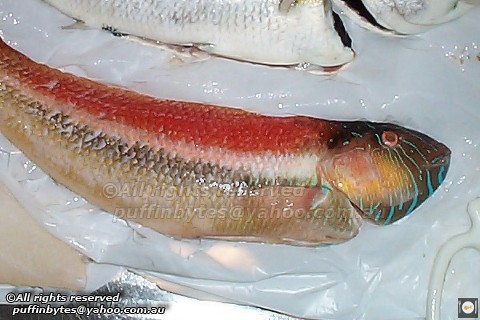
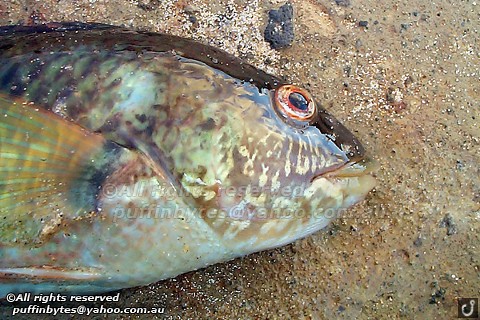
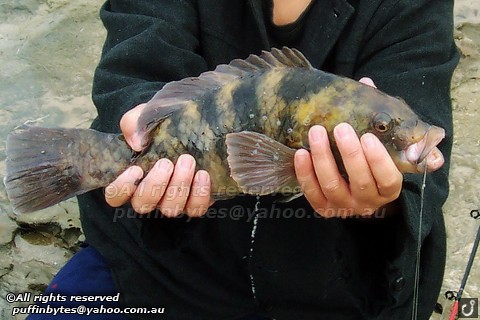
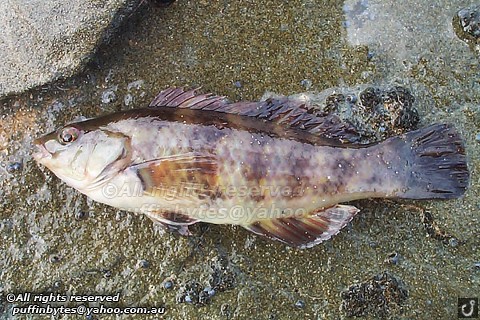
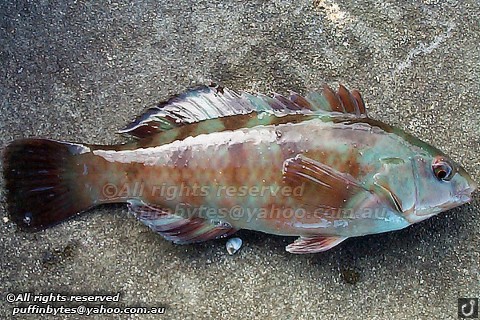
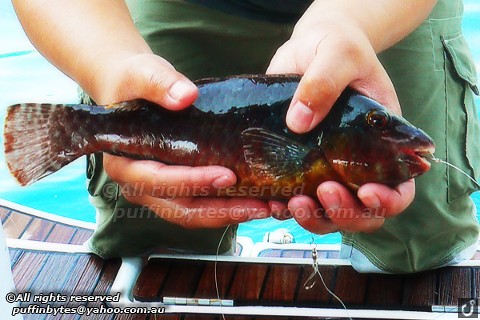
In the summer of 2006, I did 8 day sailing trip from Marmaris to Bodrum. Although not strictly in Europe, I did catch this fish in the Mediterranean part of Turkey, off the Datça Peninsular. This site, I've got the location written down as Domuzbükü, but I'm not sure where I got this name from. It was a European Parrotfish and it was 50th species of fish ever caught. It was caught on a piece of turkey ham with a handline and was released safely back into the water.

European Parrotfish - Sparisoma cretense
European Parrotfish - Sparisoma cretense #50

European Parrotfish - Sparisoma cretense

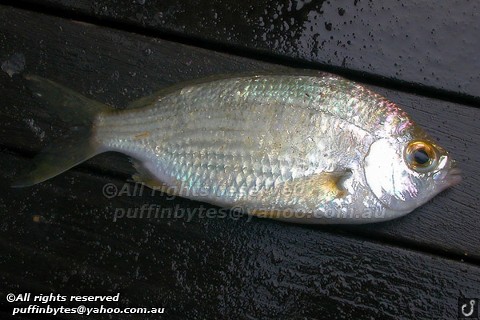
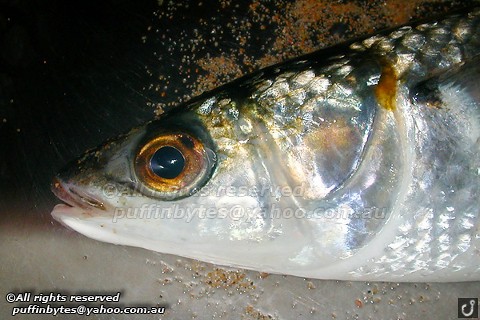
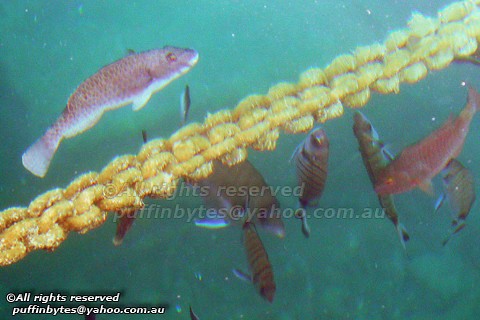
I also saw many other species in the water, including several species of bream, scorpionfish, gobies, triplefin, mullet, wrasses, picarel and parrotfish but this fish was the only fish I caught on the trip.

European Parrotfish - Sparisoma cretense
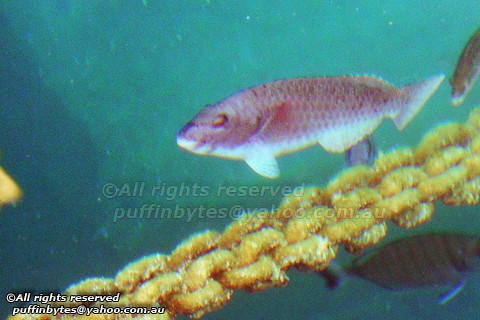
European Parrotfish - Sparisoma cretense with Sharp-nosed Bream and Peacock Wrasse


European Parrotfish - Sparisoma cretense

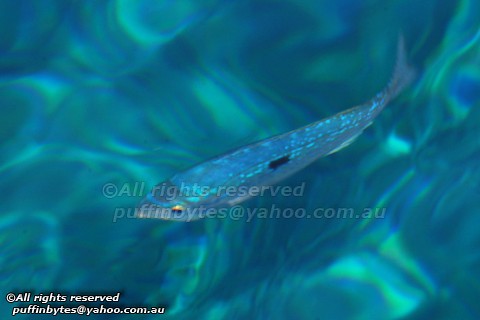
Blotched Picarel - Spicara maena

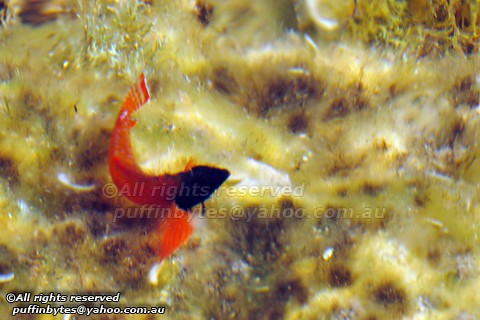
Blackfaced Blenny - Tripterygion tripteronotus

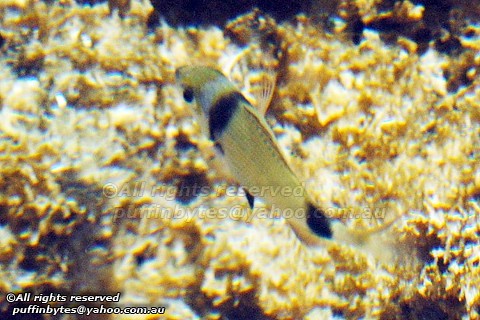
Two-banded Seabream - Diplodus vulgaris

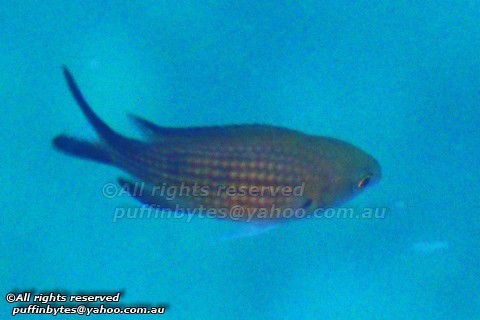
Mediterranean Damselfish - Chromis chromis

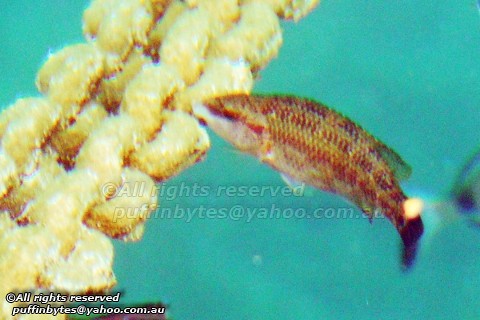
East Atlantic Peacock Wrasse - Symphodus tinca

Friday, 15 September 2000

New South Wales Fishing Trips

I've got 3 fishing trips to NSW recorded between 2000 and 2004.

15th July 2000, Montague Island

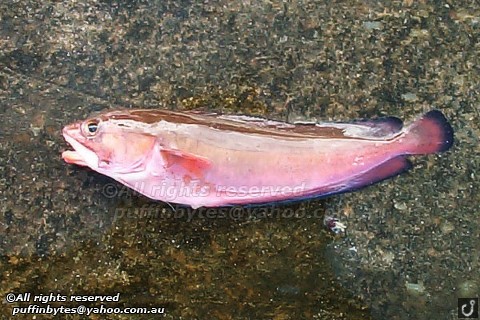
I did a long road trip from Melbourne, Lakes Enterance, Canberra, Southern Highlands, Sydney then back down to Narooma, Lakes Enterance again and then back home to Melbourne. We didn't make to fish but found a fishing/seal watching trip which took us to Montague Island when we were in Narooma. This was my first and only charterboat trip in Australia. On the Island, we saw New Zeland Fur Seals. Fishing produced Eastern Red Scorpionfish [#37], Maori Wrasse [#38], Blue Morwong [#39], many Mado [#40] and my one and only ever Crimson Banded Wrasse [#41] (a male as well), These were all beautifully coloured fish and all new species.
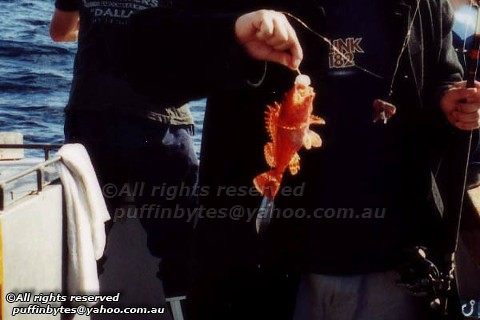

Eastern Red Scorpionfish - Scorpaena cardinalis

Eastern Red Scorpionfish - Scorpaena cardinalis #37
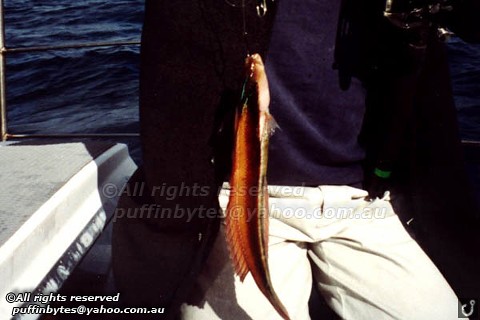
Maori Wrasse - Ophthalmolepis lineolata
Maori Wrasse - Ophthalmolepis lineolata #38
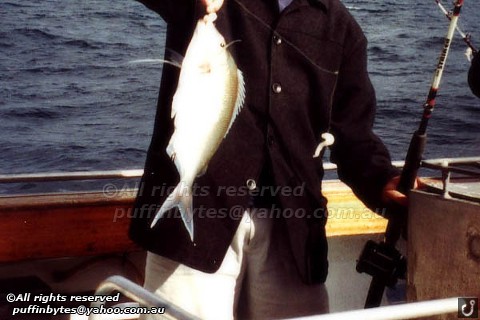
Blue Morwong - Nemadactylus douglasii
Blue Morwong - Nemadactylus douglasii #39
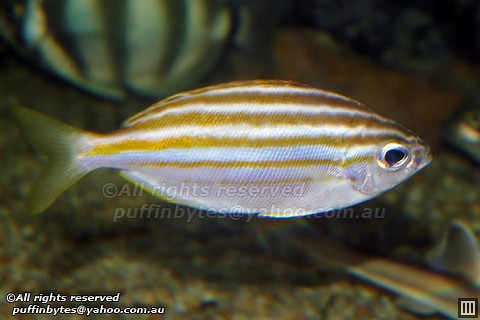
Mado - Atypichthys strigatus
Mado - Atypichthys strigatus #40

Maori Wrasse - Ophthalmolepis lineolata

Blue Morwong - Nemadactylus douglasii

15th April 2003, Port Stephens

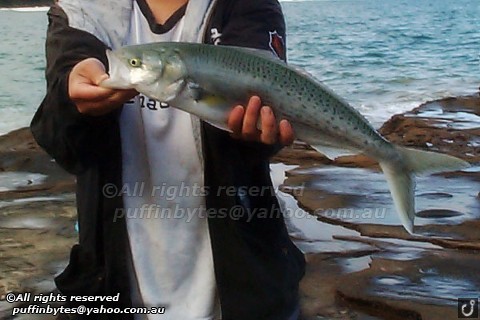
This was mainly a sightseeing trip but managed a few hours of Rock and Beach fishing. The only fish I've got recorded for this trip was my first Blue or Slimy Mackerel [#43]. My father also caught a female Crimson-baneded Wrasse.
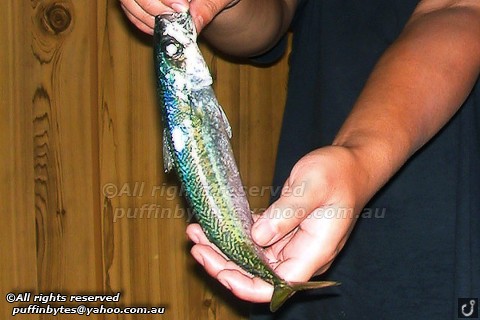
Blue Mackerel - Scomber australasicus
Blue Mackerel - Scomber australasicus #43
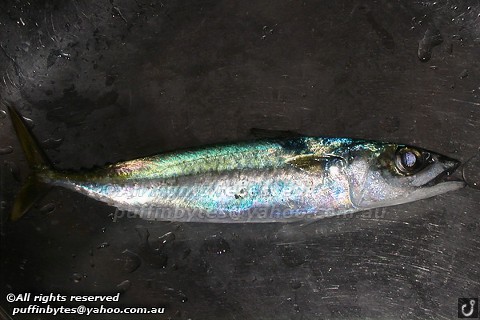
Blue Mackerel - Scomber australasicus
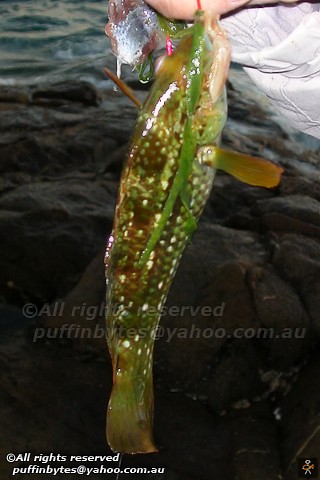

Crimson-banded Wrasse - Notolabrus gymnogenis
Female Crimson-banded Wrasse - Notolabrus gymnogenis

1st-3rd February 2004, Tathra

This was a 2 night fishing trip fishing several locations around the Tathra area. Fishing the surf beaches, I caught my first Sand Mullet [#44] as well as the usually Australian Salmon. In the nearby estuary I caught a Silver Biddy [#45]and a Tarwhine [#46], both new species as well. The following day, more Mullet and Salmon and at night, I had a bumper catch of a few dozen yellowtail scad [#47], several nice tailor and a single mackerel.
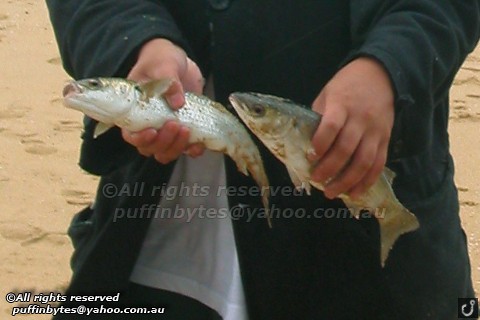

Sand Mullet - Myxus elongatus
Sand Mullet - Myxus elongatus #44


Common Silver Belly - Gerres subfasciatus
Common Silver Belly - Gerres subfasciatus #45
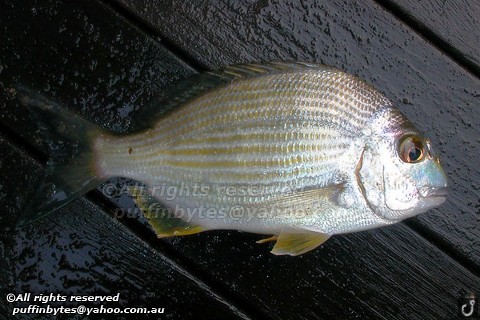
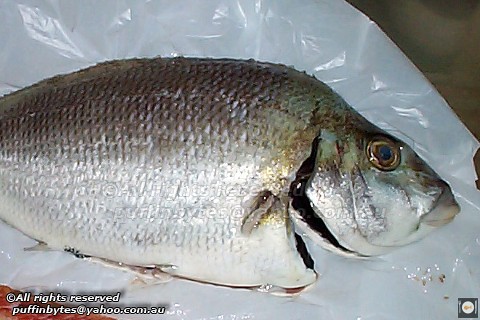
Tarwhine - Rhabdosargus sarba
Tarwhine - Rhabdosargus sarba #46


Sand Mullet - Myxus elongatus
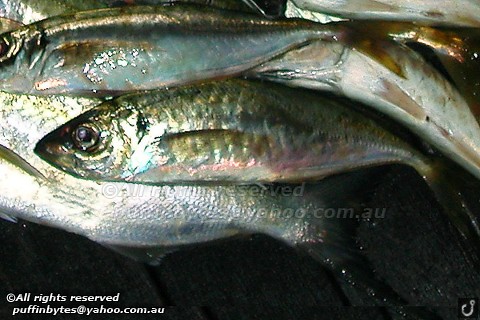

Yellowtail Horse Mackerel - Trachurus novaezelandiae
Yellowtail Horse Mackerel - Trachurus novaezelandiae #47
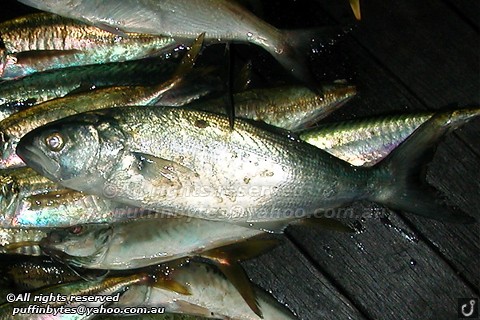
Tailor - Pomatomus saltatrix

Blue Mackerel - Scomber australasicus

Thursday, 1 January 1998

The Warmies, Newport, Melbourne

Im not sure when I first started fishing here, but I think it must be sometime in the late 1990's. The Warmies is the hotwater outlet of the Newport Powerstation. On very hot and very cold days, the Powerstation is switched on and warm water flows out. This is the best time to fish here.

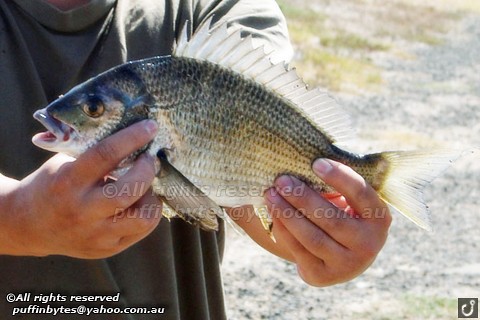
Southern Black Bream - Acanthopagrus butcheri

Snapper - Pagrus auratus

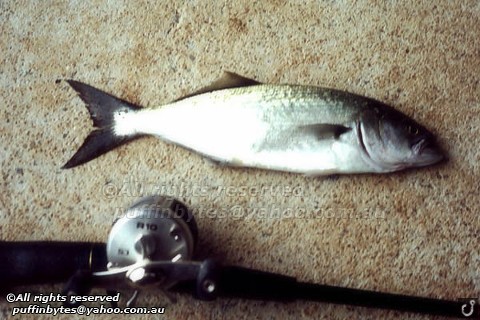
Tailor - Pomatomus saltatrix
Tailor - Pomatomus saltatrix #32

The main target species here was the Southern Black Bream, but I had an occassional Tailor or Silver Trevally. The best way to get Black Bream is the fish a small live crab and wait for a take. For Tailor or Trevally I found the best bait was pipis. This also caught a whole host of other species as well including Zebrafish, Weedfish, Blue Weed Whiting, Yellow-eye Mullet, Tasmanian Blennies, Pinky Snapper and Small Bream. At night, it is plagued with Soldierfish so you need to be careful not to get spiked as it has very venomous spines. I've heard of smaller Mulloway caught from here but I have never seen one.

Zebra Fish - Girella zebra

Common Weedfish - Heteroclinus perspicillatus
Common Weedfish - Heteroclinus perspicillatus #33

Soldierfish - Gymnapistes marmoratus

Tasmanian Blenny - Parablennius tasmanianus
Tasmanian Blenny - Parablennius tasmanianus #34


Two species of introduced goby can be found in the area as well. They've probably both been introduced from Japan through the ballast water in container ships. The Chameleon Goby, called the Japanese Goby in Australia can change into several colour forms. I've seen them completely black, brownish with spots and white with a lengthwise black stripe. The second species is called the Yellowfin Goby. In Japan its is called Ma-Haze [マハゼ(真鯊)] and is a delicacy, usually eaten battered and fried. This is actually not caught at the Warmies but a location quite nearby.

Chameleon Goby - Tridentiger trigonocephalus
Chameleon / Japanese Goby - Tridentiger trigonocephalus #35

Chameleon Goby - Tridentiger trigonocephalus
Chameleon / Japanese Goby - Tridentiger trigonocephalus

Yellowfin Goby - Acanthogobius flavimanus
Yellowfin Goby / Ma-Haze [マハゼ(真鯊)] - Acanthogobius flavimanus #36

Thursday, 1 February 1996

Great Ocean Road


Beach Fishing

If you go to just about any beach along the Great Ocean Road and throw out a line, you should be able to catch some decent sized Australian Salmon and Yellow-eye Mullet. All you need to do is setup a paternoster and bait up with pipies or pilchards and you are set.


Western Australian salmon - Arripis truttacea

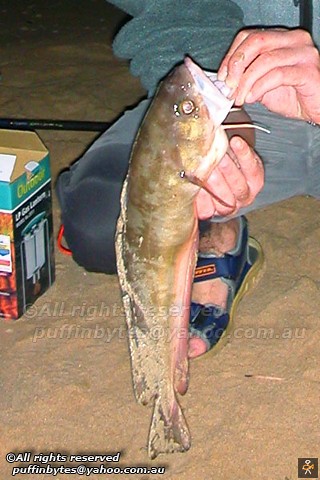
I found that at night on certain beaches, if you cast any bait out, you will end up with a Bearded Cod [#27] on the end of your line. Cod are meant to be sports fish and hard fighters, but the Bearded Cod, although related to true Cods, have tiny tails and fight very poorly for their size. If you can manage to avoid the Cod, you might get into some really nice snapper on these same beaches.


Bearded Cod - Pseudophycis barbata
Bearded Cod - Pseudophycis barbata #27


Bearded Cod - Pseudophycis barbata


Snapper - Pagrus auratus

Rock Fishing

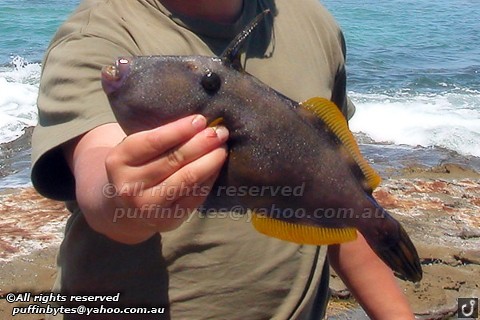
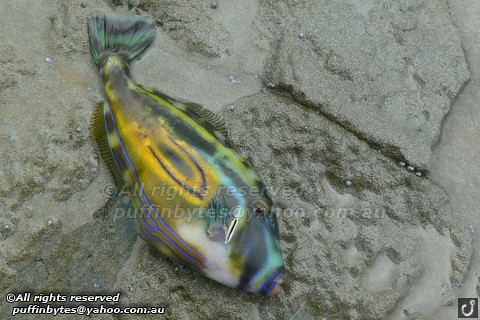
As well as the species I talked about in the previous blog post, you are also likely too hook into some leatherjackets. These are close relatives to Triggerfish and are called filefish in other countries because of their rough skins. I have probably caught other species but only have photographs of two species. They are the Six-spined Leatherjacket [#28] and Horseshoe Leatherjacket [#29]. I think the names are quite descriptive. The Six-spined has six spines at the base of it's tail and the Horseshoe as a large horseshoe shape on its flanks.


Six-spined Leatherjacket - Meuschenia freycineti
Six-spined Leatherjacket - Meuschenia freycineti #28


Horseshoe Leatherjacket - Meuschenia hippocrepis
Horseshoe Leatherjacket - Meuschenia hippocrepis #29

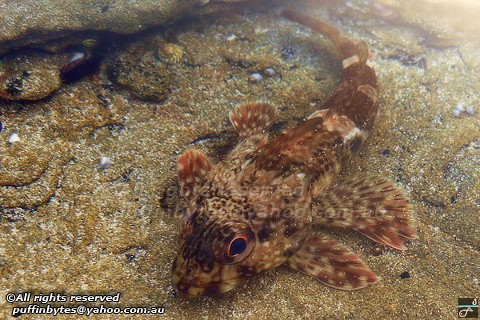
Another nuisance fish you might get here is the Dragonet, also known as the Thornfish [#30]. They might look venomous with they scorpionfish like shape, but are actually harmless.


Thornfish - Bovichtus angustifrons
Thornfish - Bovichtus angustifrons #30

When Fishing the rocks, you may try to fish into the deeper clear water sections of wash where you can target Sea Sweep [#31]. These are more mid to top-level feeder so make sure you bait is not sitting at the bottom.


Sea Sweep - Scorpis aequipinnis
Sea Sweep - Scorpis aequipinnis #31

Monday, 1 January 1996

First Rockfishing Trip - Lorne


My earliest memories of fishing in Lorne may have been from the 80’s where I fished for Yellow-eye Mullet in the St. Georges River a few kilometres to the southwest. We used float fishing techniques an bread dough for bait. I do recall catching quite a big Galaxias as well, but I really can’t tell you what species it was.

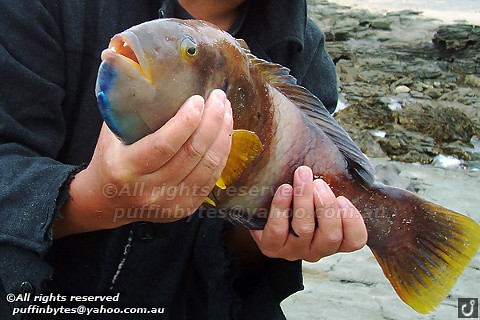
It was only until after I moved to Werribee that Lorne was much more accessible. I recall my first rock fishing session there. I don’t remember which year or month it was, but I do remember the first fish and how. I had stumbled on a nice rocky headland and decided to try and fish it using some prawns. On the first drop, and within seconds, with much suprise, I had hooked into a fully grown male Blue-throated Wrasse [#24], which led to my life long obsession with catching wrasse from the rocks here. It was the first time I had ever seen a wrasse, but it is such a stunning looking fish. Blue-throated Wrasse are quite easily told apart from the other common wrasse, the Saddled Wrasse (see below) because they always have yellowish fins. The immatures are quite similar as well, but just check the fins to be sure.


Blue-throated Wrasse - Notolabrus tetricus
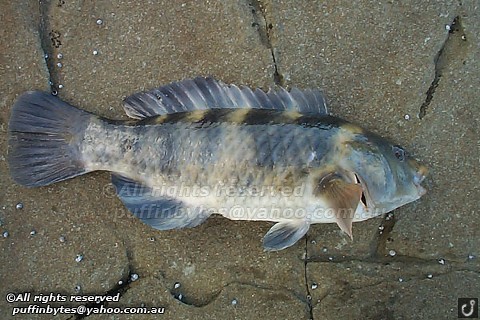
Blue-throated Wrasse - Notolabrus tetricus #24
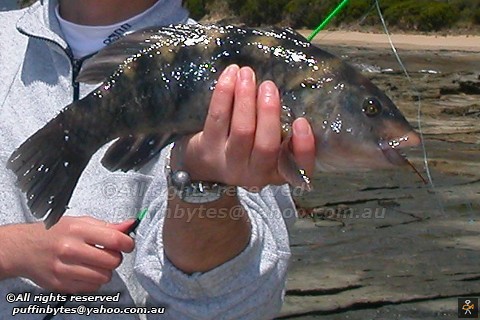

Blue-throated Wrasse - Notolabrus tetricus
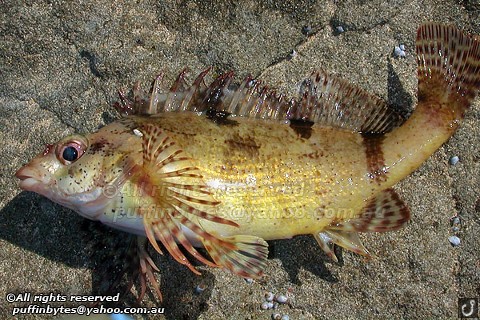
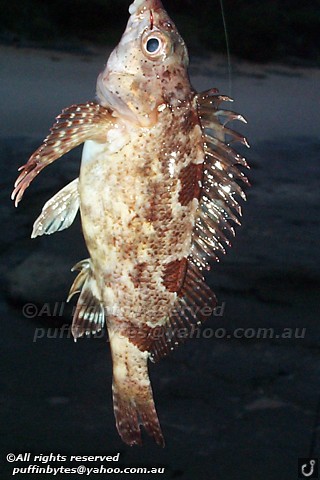


Blue-throated Wrasse - Notolabrus tetricus

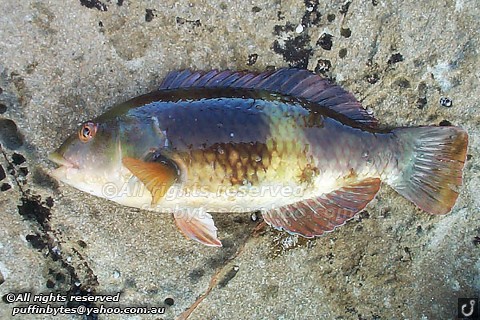
Within a few minutes of catching the Blue-throated Wrasse, I pulled out another wrasse, the Saddled Wrasse [#25]. I found these to be the most common of the wrasses in the western part of Victoria and have given good sport throughout the years. They are usually grey or brown with yellowish saddles along their backs.


Saddled Wrasse - Notolabrus fucicola
Saddled Wrasse - Notolabrus fucicola #25


Saddled Wrasse - Notolabrus fucicola


Saddled Wrasse - Notolabrus fucicola


Saddled Wrasse - Notolabrus fucicola


Saddled Wrasse - Notolabrus fucicola

Amongst the wrasse, I also caught a weird fish with cirri on it’s dorsal fin and white spots on its gills, a Western Kelpfish [#26]. These are a temperate relative of the colourful coral reef dwelling hawkfishes.


Western Kelpfish - Chironemus georgianus
Western Kelpfish - Chironemus georgianus #26


Western Kelpfish - Chironemus georgianus


Western Kelpfish - Chironemus georgianus


Western Kelpfish - Chironemus georgianus

In the next post I will talk about the other species I'd caught around Lorne and the Great Ocean Road.